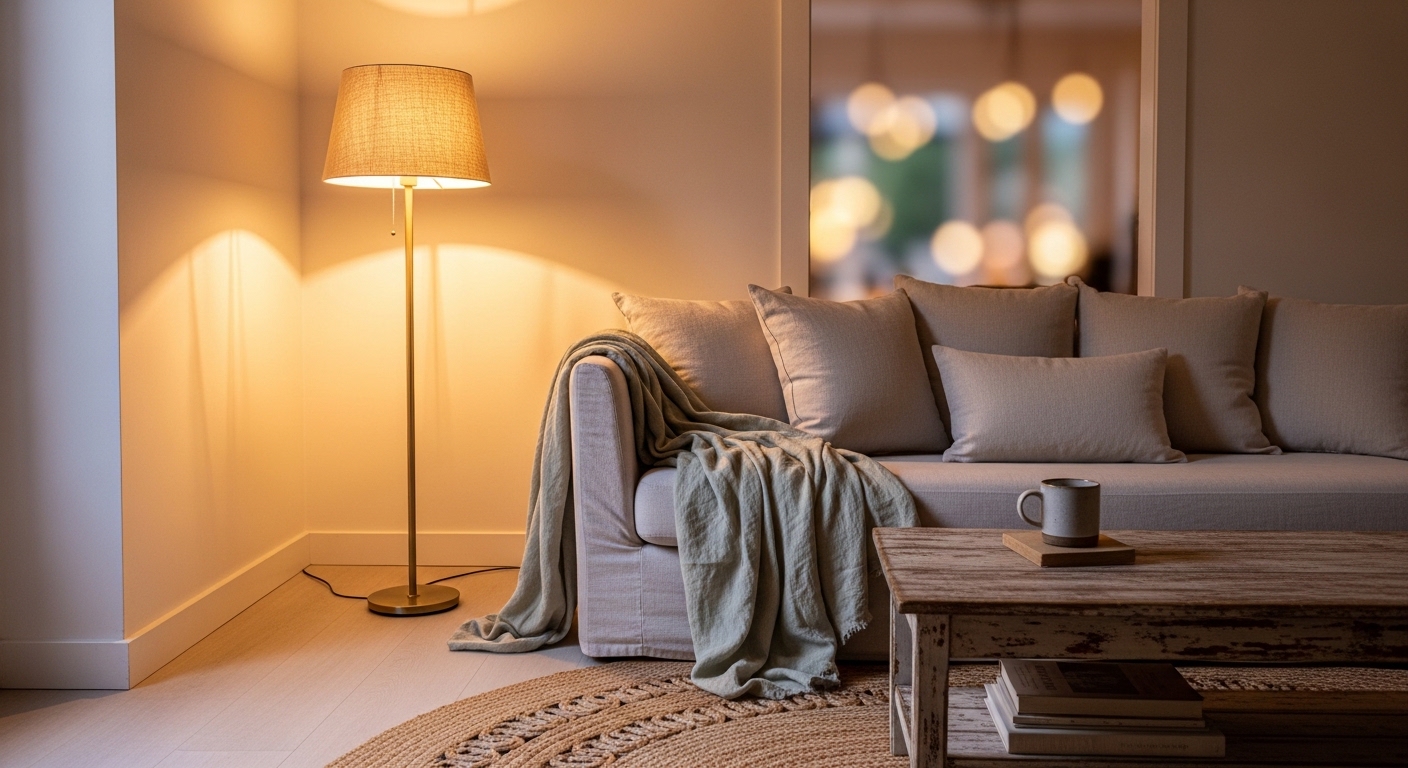
Cozy Atmosphere
When we moved into our cottage, I replaced all the old incandescent bulbs with LEDs in one trip to the hardware store. I grabbed whatever was on sale and called it done. For two years, something about the main rooms bothered me and I couldn't name it. The lights worked. They were energy efficient. But the cottage felt slightly clinical, like a very nice waiting room.
Then a friend visited, looked around, and said immediately: "Your bulbs are too cool." She pointed at the ceiling. "You want 2700, not 3000." I had no idea what she meant. But I bought a pack of 2700K bulbs on the way home and changed every light that evening. The difference was visible before I'd finished the living room.
Color temperature is measured in Kelvins. Lower numbers are warmer (more amber, more golden). Higher numbers are cooler (whiter, more blue-shifted). A candle is roughly 1800K. Old incandescent bulbs were 2700K. Natural daylight at noon is around 6500K. The LED bulbs I'd been using were 3000K, technically "warm white," but noticeably cooler than the incandescent glow we grew up with.
For living spaces, bedrooms, and dining rooms, 2700K is the sweet spot. It's flattering to linen, wood, and skin. The pendant lights above my kitchen table look completely different at 2700K than they did at 3000K, more intentional, more European kitchen, less grocery store.
The one exception I make is the bathroom vanity, where I use 3000K. Applying makeup under 2700K can leave you looking dramatically different in daylight. Everywhere else in the cottage: 2700K, consistently. Once you switch, you'll never go back.
Naomi at Nest by Naomi came at this from a graphic designer's angle in her color temperature observations for screen-heavy work, useful for understanding the science behind why warm feels better.