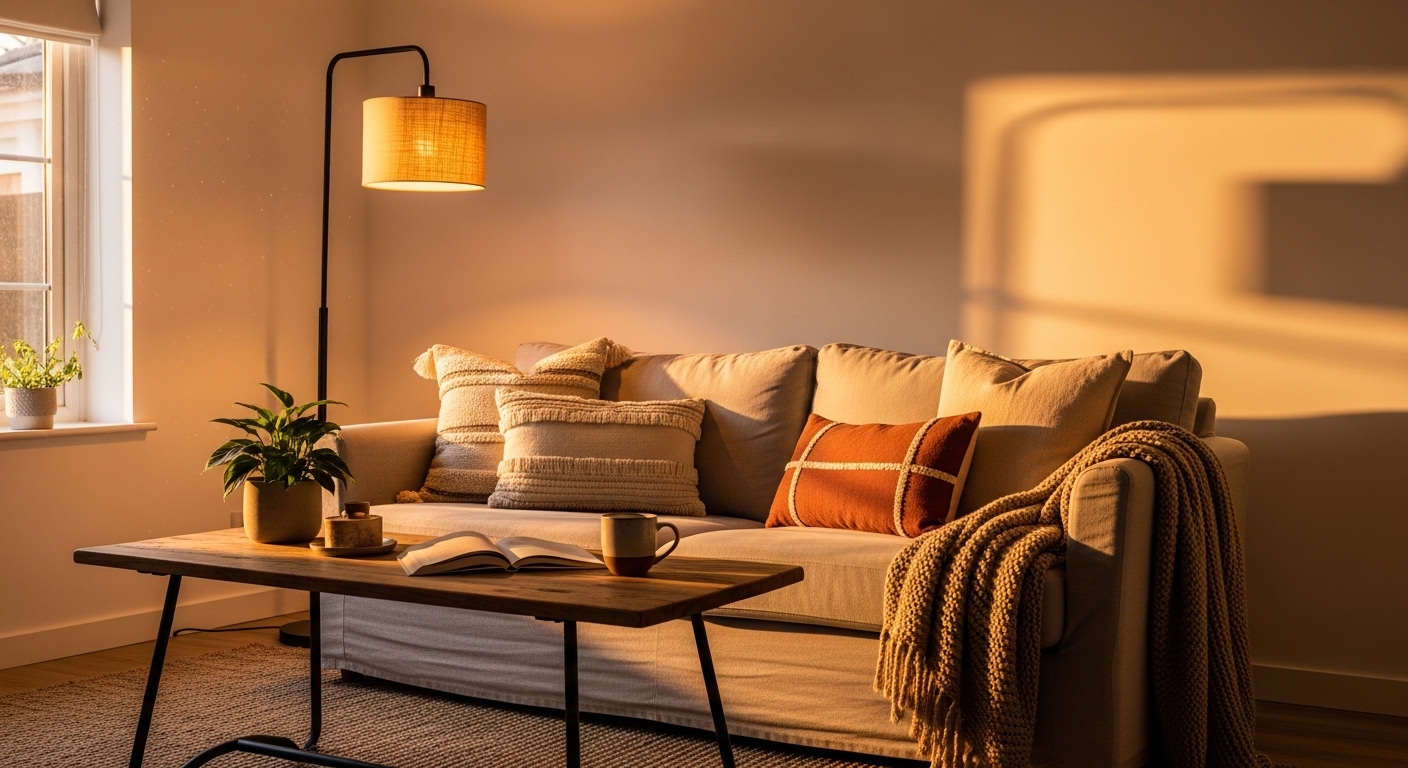
Cozy Atmosphere
I used to think soft white and warm white were just two names for the same thing. Both warmer than daylight bulbs, both better than the fluorescent horror of office lighting. Then I bought a pack of each and put them side by side in two identical table lamps in the living room. The difference was immediately obvious and slightly embarrassing, given how long I'd been using the wrong one.
Soft white typically means 2700K on the color temperature scale. Warm white tends to mean 3000K. Both are warmer than the "bright white" (4000K) you find in workspaces and garages, but the gap between 2700 and 3000 is more significant than those 300 degrees suggest. In practice, 2700K has a golden, amber quality. 3000K reads as neutral to slightly cool in comparison.
In our cottage, I use 2700K everywhere except two places: the bathroom vanity and the kitchen task area. The bathroom gets 3000K because true color rendering matters when you're getting dressed or applying makeup. The kitchen task area gets 3000K for the same reason. I want to see accurate colors when I'm cooking.
The pendant lights over the dining table are 2700K, and they make every dinner feel a little special. When guests come over, no one ever says the lighting is good. They just seem to relax faster, linger longer. That's soft white doing its quiet work.
If you're replacing bulbs and only remember one thing: go 2700K in rooms where you want to feel at home, 3000K in rooms where you need to see clearly. It takes the guesswork out of every trip down the lighting aisle.