Cozy Atmosphere
The first year in this cottage, I decorated around the lighting instead of fixing it. I chose furniture colors that worked under the cool overhead glow. I bought warm-toned rugs and throws hoping they'd compensate. They helped, but the rooms still had a flatness to them, an everything-lit-equally quality that made the space feel rented rather than owned.
The year I finally addressed every overhead fixture was the year the cottage started feeling like mine. I didn't remove them all. Some just needed better bulbs and dimmers. But others required a proper replacement, and that was where the real transformation happened.
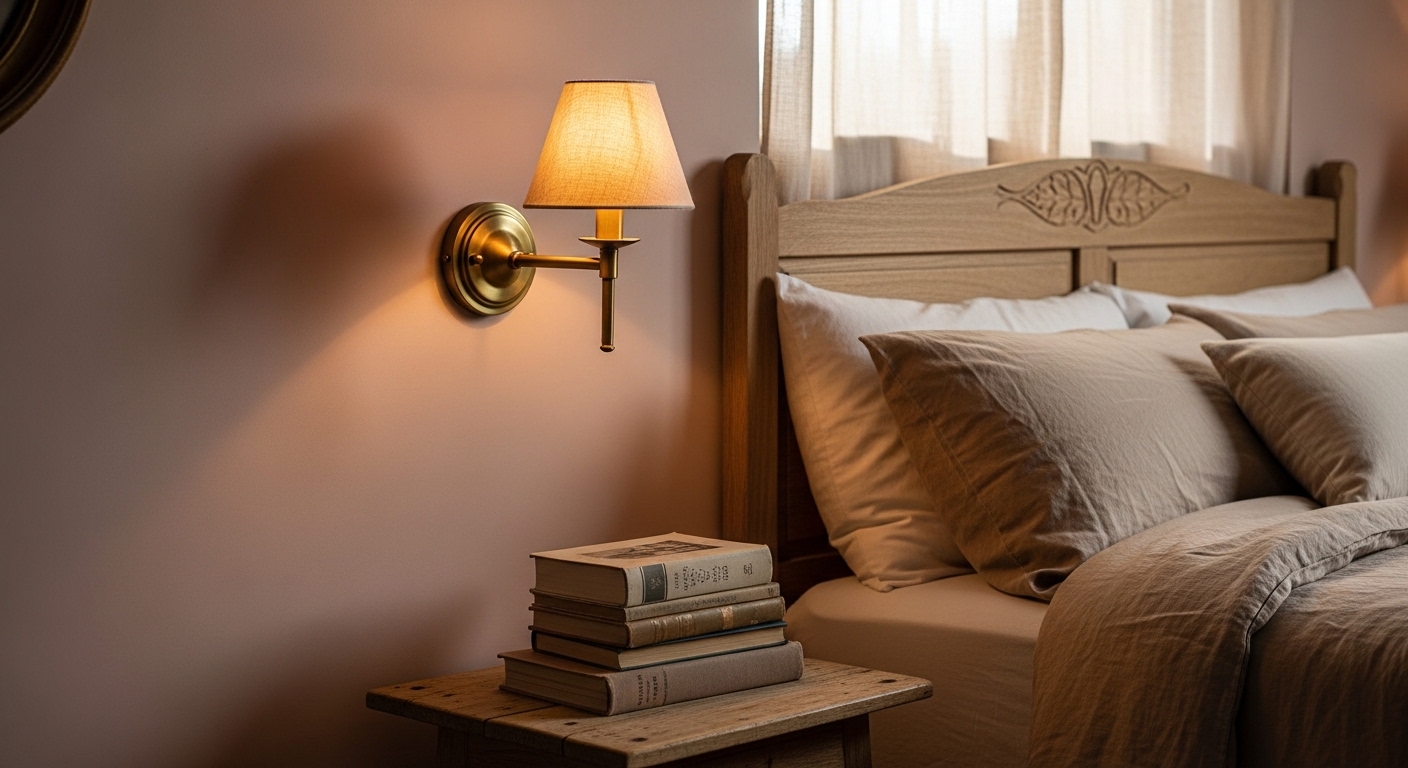
The living room overhead became a set of wall sconces flanking the fireplace. The ceiling fixture stayed but got put on a dimmer and stays off 90 percent of the time. The hallway got a low-profile flush mount ceiling light with a soft linen shade, still functional but far less institutional. The bedroom overhead I kept on a dimmer and use only when I need to find something that's rolled under the bed.
The kitchen was the hardest decision. I needed real task lighting to cook safely, but I wanted warmth too. The solution: pendant lights over the island on one circuit, undercabinet LED strips on another, and the original overhead on a separate dimmer. Different zones for different needs. Cook dinner in full light, eat it by pendants alone.
None of this happened in one weekend. I did it room by room over about eight months. But each change compounded on the last, and by the time I replaced the final hallway sconce, the cottage felt genuinely different. Less like a well-decorated apartment. More like a home that had been thought about.
Michelle at The Wharton House did the same project across an entire historic home for under $600 in her whole-house lighting upgrade post, her room-by-room prioritization approach is exactly right.