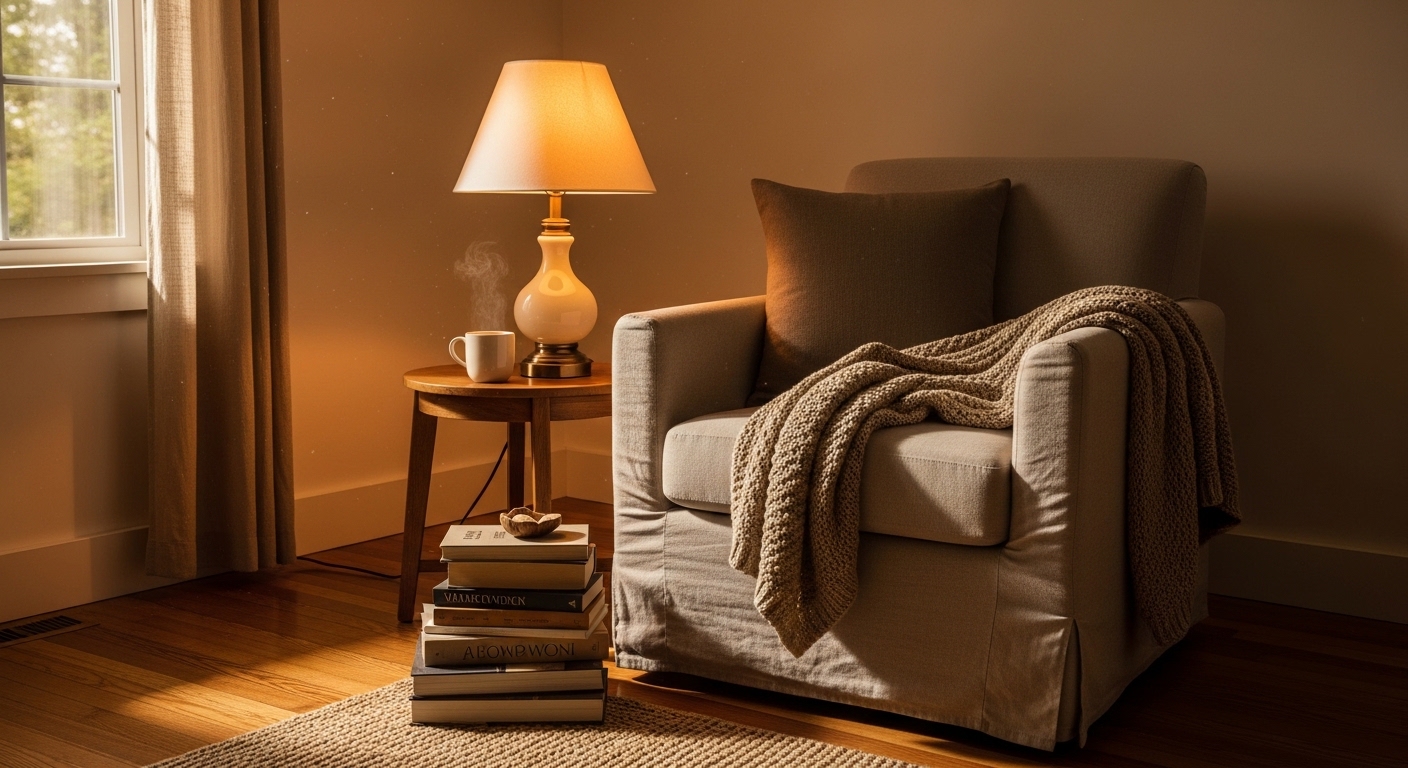
Cozy Atmosphere
The reading nook in our cottage is an alcove off the library, barely five feet wide, with a cushioned window seat and a shelf of paperbacks on the left wall. When I decided to add a pendant light, I hung it from the ceiling center and assumed the placement would take care of itself. It did not. Too high, and the light scattered uselessly around the alcove without illuminating the seat. Too low, and I kept flinching when I stood up.
The formula I eventually found: hang the bottom of the pendant at 60 to 66 inches from the floor, or 15 to 18 inches above the seat surface. In a standard reading nook with a bench or window seat, this puts the cone of light right where you need it, falling over your shoulder and onto the page, without being in your direct eyeline when you look up.
Style matters for function in a pendant. I tried an exposed-filament bulb on a cord first, beautiful, very editorial. But anytime I looked up from a book, I was looking directly into the bulb. Replaced it with a shaded pendant light that directed light downward, and the problem disappeared immediately. The shade isn't just decorative; it controls where the light goes.
The other thing I'd tell anyone adding a pendant to a nook: use a bulb with a slightly higher lumen count than you think you need. Reading requires more light than relaxing. I use a 450-lumen 2700K bulb on a dimmer, full brightness for reading, dimmed down when I just want to sit quietly with a cup of tea and feel like the nook is a lantern.
Get the height right first. Everything else about the nook is forgiving. The pendant height is the one thing that will determine whether the light actually works for reading, or just looks nice while you strain your eyes.
Michelle at The Wharton House wrote a thorough guide on pendant light height over a kitchen island. The measurement logic applies directly to a reading nook.