Room by Room
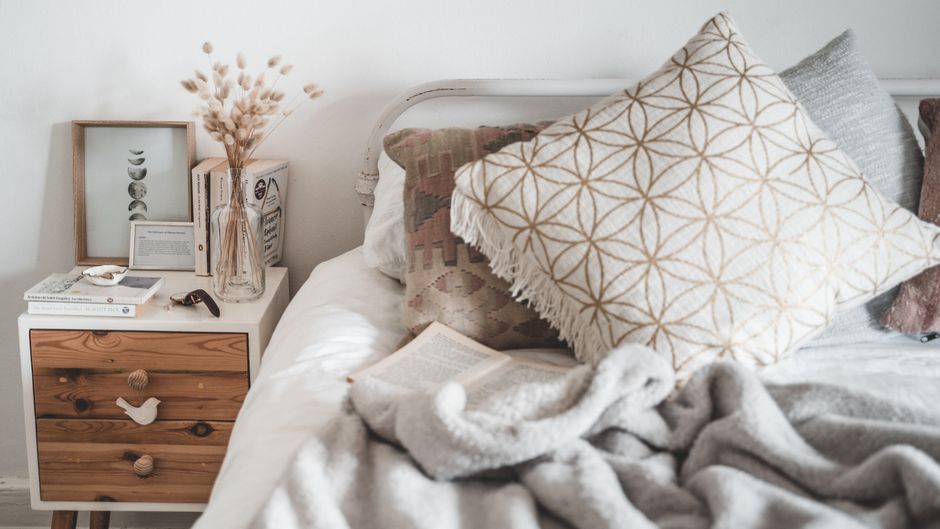
Most photos of linen throw pillows on beds involve eight to twelve pillows. They look right in the photograph. They are not how you actually want to start and end your day. I spent about six months in pillow excess before figuring out the smaller, more livable version that I've had on the bed for two years now.
The short answer is five. Two king-size sleeping pillows in linen pillowcases, two standard euro shams in natural undyed linen, and one lumbar pillow in a slightly different texture. That's it. But the arrangement and the logic behind it took some working out.
Linen pillowcases and pillow covers age better than almost any other fabric. Cotton pilling starts showing up in about eight to twelve months on a bedside pillow that gets moved twice a day. Linen softens rather than degrading, my euro shams from Cultiver are three years old and look better now than they did when I bought them. The weave is slightly irregular to begin with, so the texture that develops over time looks like character rather than wear.
The other practical thing about linen is that it doesn't hold a crease from sitting in a pile the way cotton does. When I throw the lumbar pillow into the corner of the armchair at night, it comes back to the bed without looking creased. That matters in a room I'm trying to keep looking pulled together without spending time on it.
Back row: the sleeping pillows, standing upright, in natural undyed linen cases. These are the pillow pillows, the ones that disappear into the stack and provide height for the arrangement. They're 40-inch king cases on standard sleeping pillows, which means they have a slight fullness rather than a flat look.
Middle row: two 26-inch euro shams. These sit in front of the sleeping pillows and create the middle height in the arrangement. Mine are a slightly warmer shade than the sleeping pillowcases, oatmeal rather than natural white. That tonal variation reads as intentional without being busy. If the euro shams and the sleeping pillowcases were exactly the same color, the whole stack would look like one flat layer rather than depth.
Front: one 12x20-inch lumbar pillow. Centered. Not two throw pillows, not a cluster of three, one. The lumbar shape anchors the arrangement horizontally and the smaller scale makes the euro shams visible rather than competing with them. I've tried this spot with a standard square throw pillow and it doesn't work as well: the square gets lost against the euro shams behind it because they're almost the same size and shape.
I used to have a bolster across the back of all of it. That's now gone, it added another layer that made the bed feel more display than bed. I also removed two smaller square accent pillows in a slightly different pattern that I thought added interest. They added clutter. The pattern variation in linen textures does the work that patterned fabric would otherwise do.
The rule I use now: if a pillow isn't either sleeping on or structurally necessary for the arrangement, it doesn't belong there. The lumbar is the only pillow that's purely decorative, and it earns its spot by doing something the other pillows can't do in terms of shape.
This might sound tangential, but the linen arrangement reads completely differently depending on the bedside lighting. Overhead light at full brightness flattens the texture of linen into a plain beige surface. The same arrangement under BO-HA sconces at 40% dimmer in 2700K warm white shows every texture variation in the weave, the slight irregularity that makes linen look like linen rather than cotton.
I mentioned this in my post on the Asheville bedroom makeover, but it's worth saying again: if linen textiles look flat in your bedroom, check the lighting before changing the textiles. Low-angle warm light does more for linen than any styling choice.
It took me longer than it should have to accept that simpler was right. But the bed I have now is one I can make in 90 seconds every morning and feel good about all day. That's the actual goal, not a photograph, a bed you're happy to come home to.