Room by Room
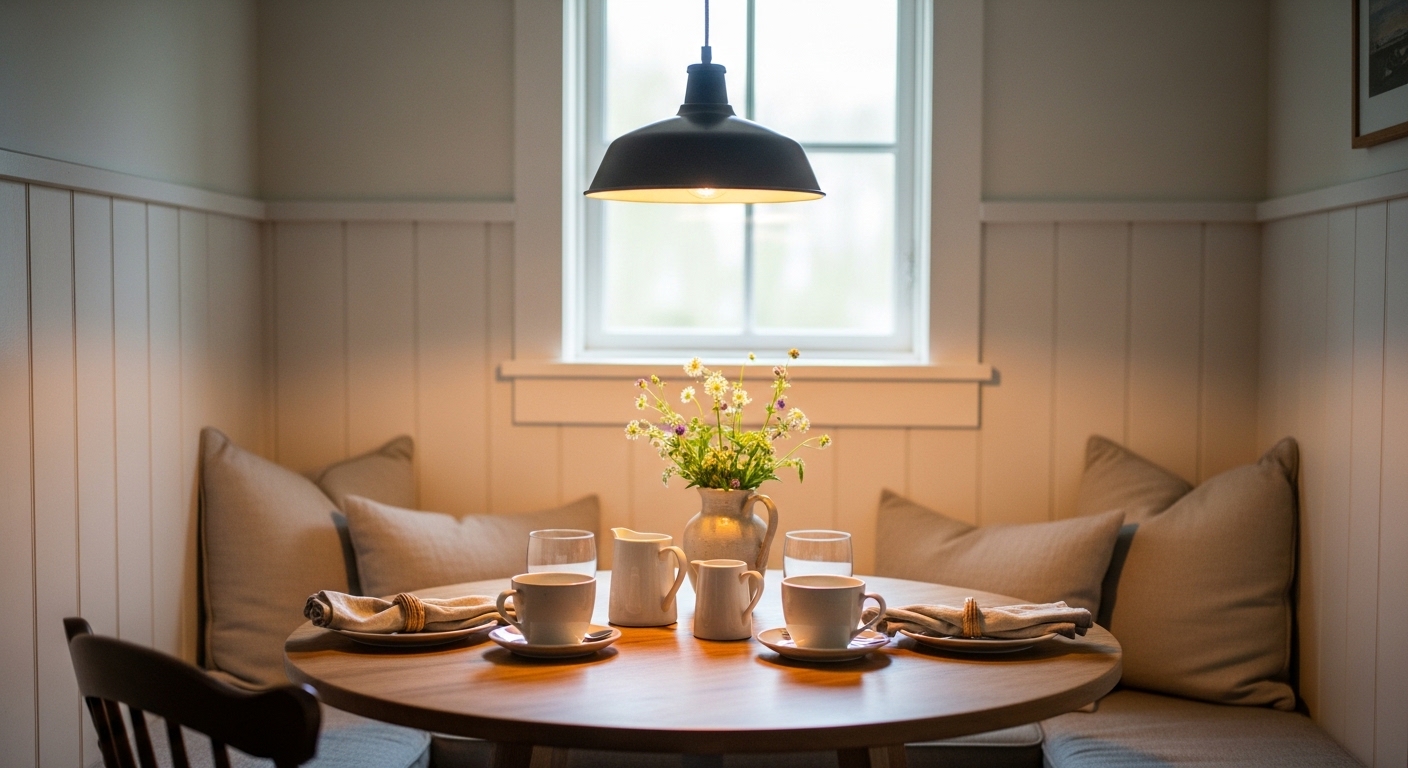
There is a quality to linen in good light that is almost impossible to describe without sounding excessive. The texture becomes visible. You can see the weave, the slight irregularity of the fibers, the warmth in even a pale undyed fabric. In bad light, linen goes flat. The room feels decorated rather than inhabited.
Our living room is predominantly linen: sofa slipcover, curtains, throw pillows, the shades on two of the lamps. Getting the lighting right took about a year of adjustments, but the principle is simple: warm, directional, layered.
Warm means 2700K everywhere in this room. Directional means the light hits the surfaces at an angle. Two wall sconces flanking the fireplace graze across the sofa in a way that makes every fold of fabric catch the light. A centered pendant light hung over the seating adds another source without competing.
Layered means no single source does all the work. The sconces, the pendant, a floor lamp in the far corner, a table lamp on the bookshelf, all separate circuits, all on dimmers. In the afternoon I might use only the floor lamp. In the evening, all four at low levels create a room that feels gathered and alive.
The linen itself becomes more beautiful as the light gets lower. At 20 percent on a dimmer, the sofa practically glows. The texture is visible from across the room. The problem was never the linen. It was the light I was asking it to perform under.
Michelle at The Wharton House documented her living room lighting makeover using layered sconces, a good example of the approach I describe applied in a period home.