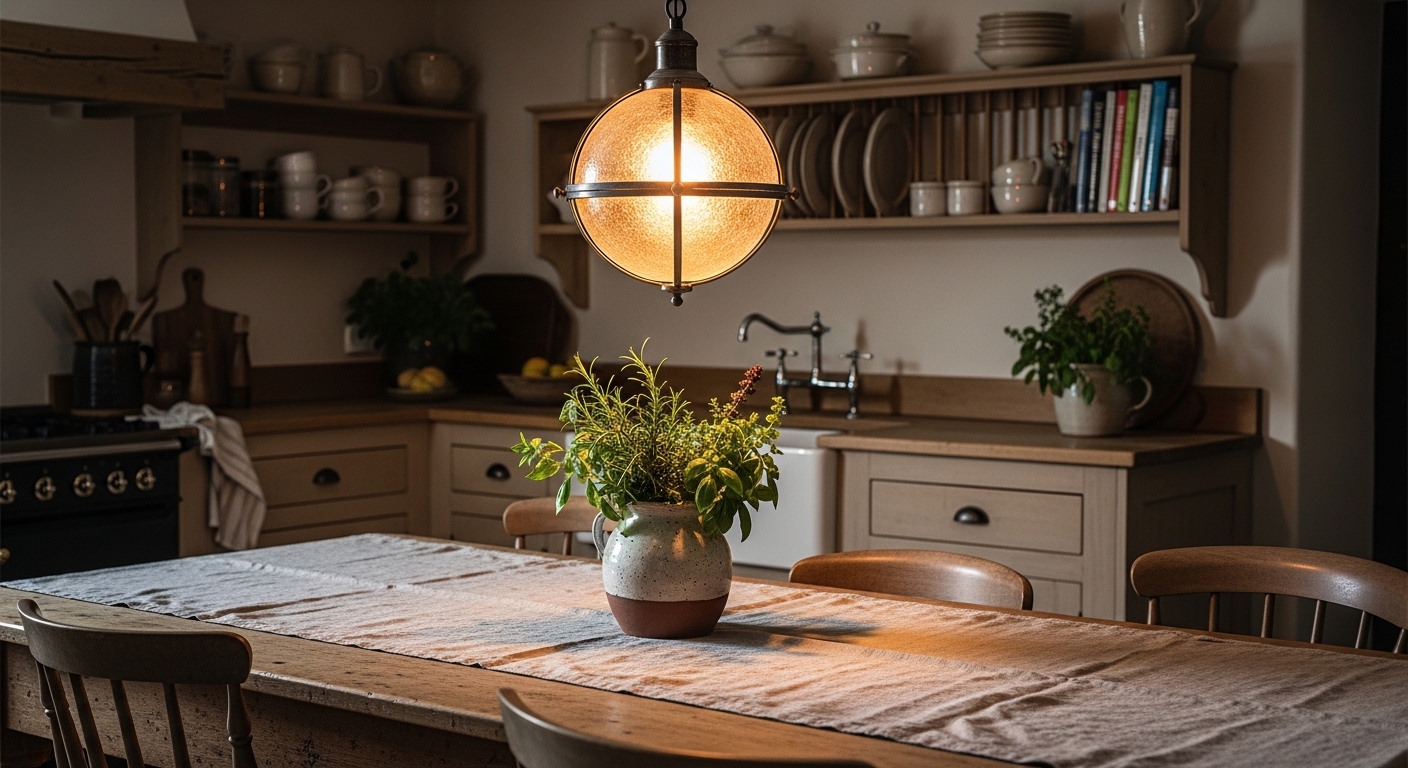
Cozy Atmosphere
There is a specific quality to candlelight that no other light source quite matches: it flickers, yes, but more than that, it comes from below eye level. It pools. It doesn't try to illuminate everything at once. It lets shadows exist. Most of our electric lights do the opposite. They're overhead, they're bright, and they're designed to eliminate shadow entirely.
To get close to candlelight with electricity, you need three things: warm color temperature (2700K or lower), low lumen output. And multiple sources spread around the room rather than one bright overhead. These together create the pooled, layered quality that makes a room feel gathered and intimate.
In our living room, I removed the floor lamp entirely and replaced it with a plug-in wall sconce on a dimmer. I added a small lamp behind the sofa and another on the bookshelf. When all three are on at 25 percent, the room looks remarkably close to candlelight, warm, pooled, alive with subtle shadow. No open flame, no fire risk, no forgetting to blow anything out.
The bulb choice matters too. Clear-glass filament LED bulbs with a visible amber element come closest to the candlelit aesthetic. The filament itself glows warmly and the clear glass lets the light radiate in all directions, the way a candle does. Frosted glass diffuses too evenly and loses that characteristic warmth.
On evenings when I want the full effect, I turn off everything else and use just these three sources, all dimmed low. My husband picked up a book one night and said it felt like we were in a French farmhouse. Close enough.
Michelle at The Wharton House covers the practical side in her post on adding dimmer switches over a weekend, dimmers are the foundation that makes everything else possible.