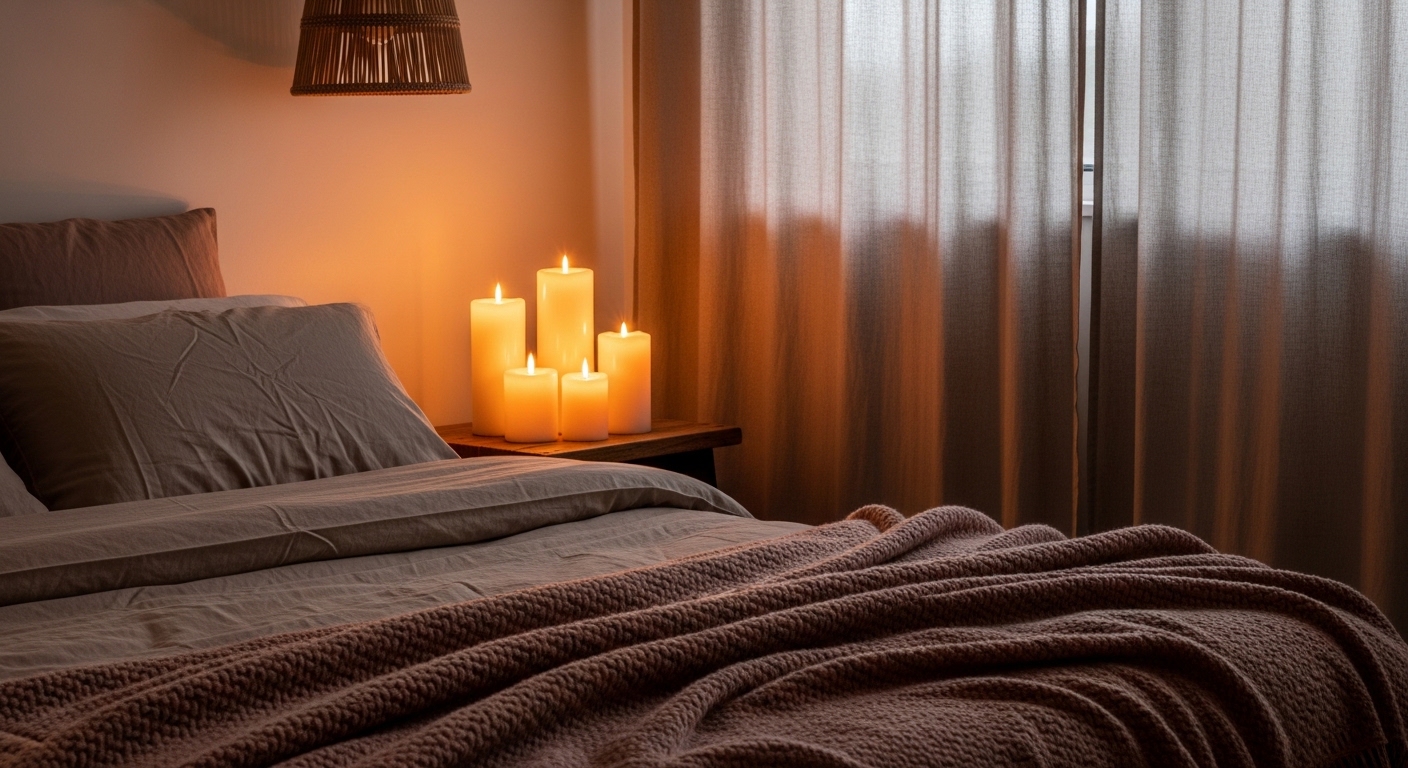
Cozy Atmosphere
For years, the bedroom in our Asheville cottage had one ceiling light, a flush mount with a 60-watt equivalent bulb that blazed like a parking lot. It lit everything equally and flatteringly for nothing. I dressed in it, fell asleep under it, and woke up to it on dark winter mornings feeling vaguely disoriented.
Everything changed when I learned about layered lighting. The idea is simple: instead of one source doing all the work, you use three types of light at different heights and intensities, each with its own purpose. Ambient light gives you enough to navigate the room. Task light focuses where you need it, beside the bed for reading, above the dresser for getting dressed. Accent light adds atmosphere and warmth, the kind that makes a room feel inhabited rather than just occupied.
In our bedroom, I kept the ceiling fixture but swapped the bulb for a soft 2700K warm white and added a dimmer. Then I added a pair of bedroom wall sconces on either side of the headboard, mounted at 60 inches from the floor. On the dresser, a small ceramic table lamp with a linen shade. Three sources, three heights, three moods.
The difference was immediate. In the morning I use just the dresser lamp, a gentle glow that doesn't demand anything. In the evenings, reading in bed, I use just the sconces. When I want the room to feel romantic or calm before sleep, I dim everything low and let the accent lamp do its quiet work. The overhead only comes on if I'm searching for something.
If you're starting from scratch, begin with the sconces. They do the most work in a bedroom. Both as task light and as the visual anchor that makes the bed feel intentional. Then add a dimmer to whatever overhead you have, and find a small lamp you love for the dresser or a corner. You don't need to renovate. You just need to stop asking one light to do everything.
Michelle at The Wharton House documented a $30 bedroom lighting upgrade that started with the same principle, swap the overhead for something layered. The budget version of this story.